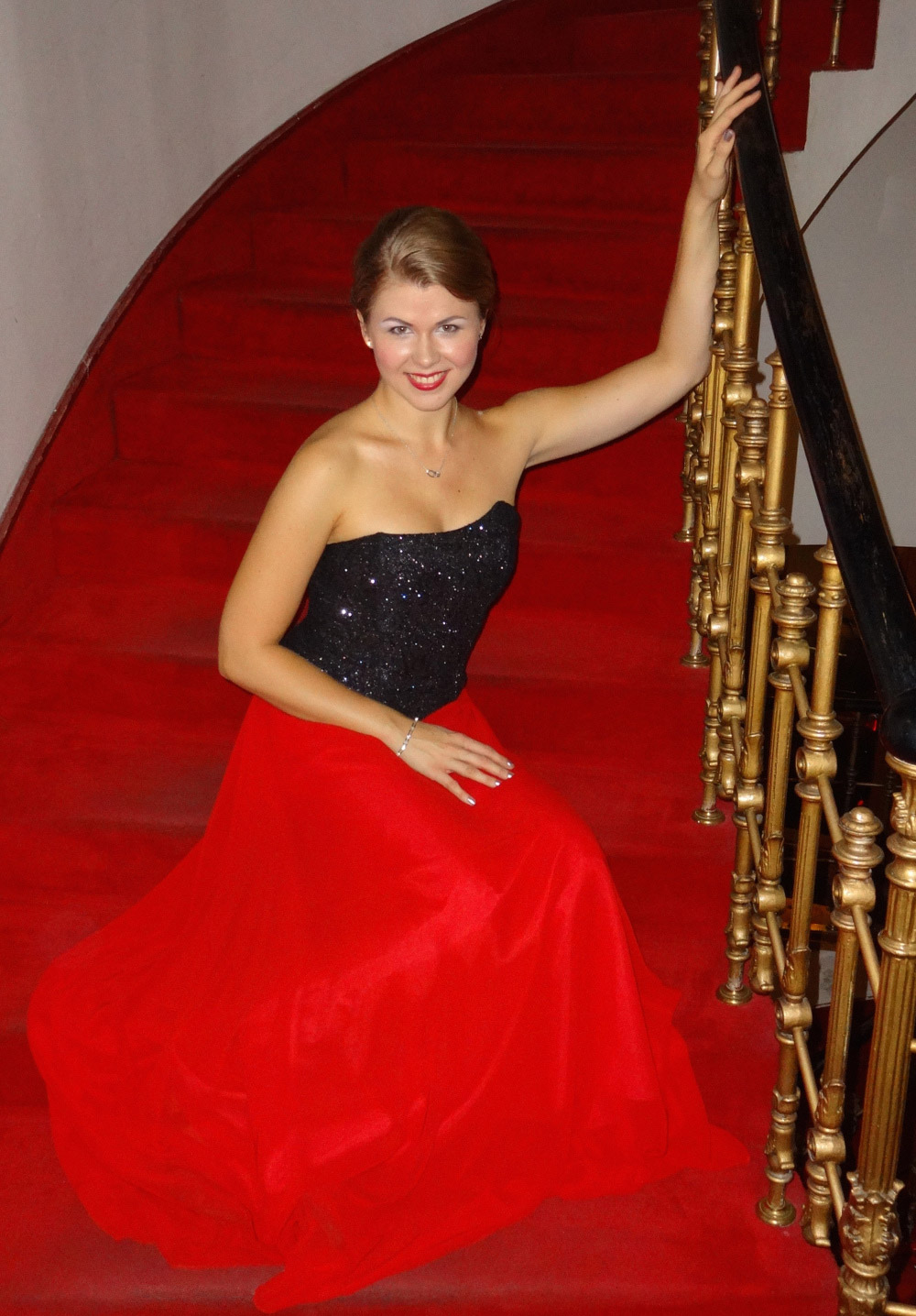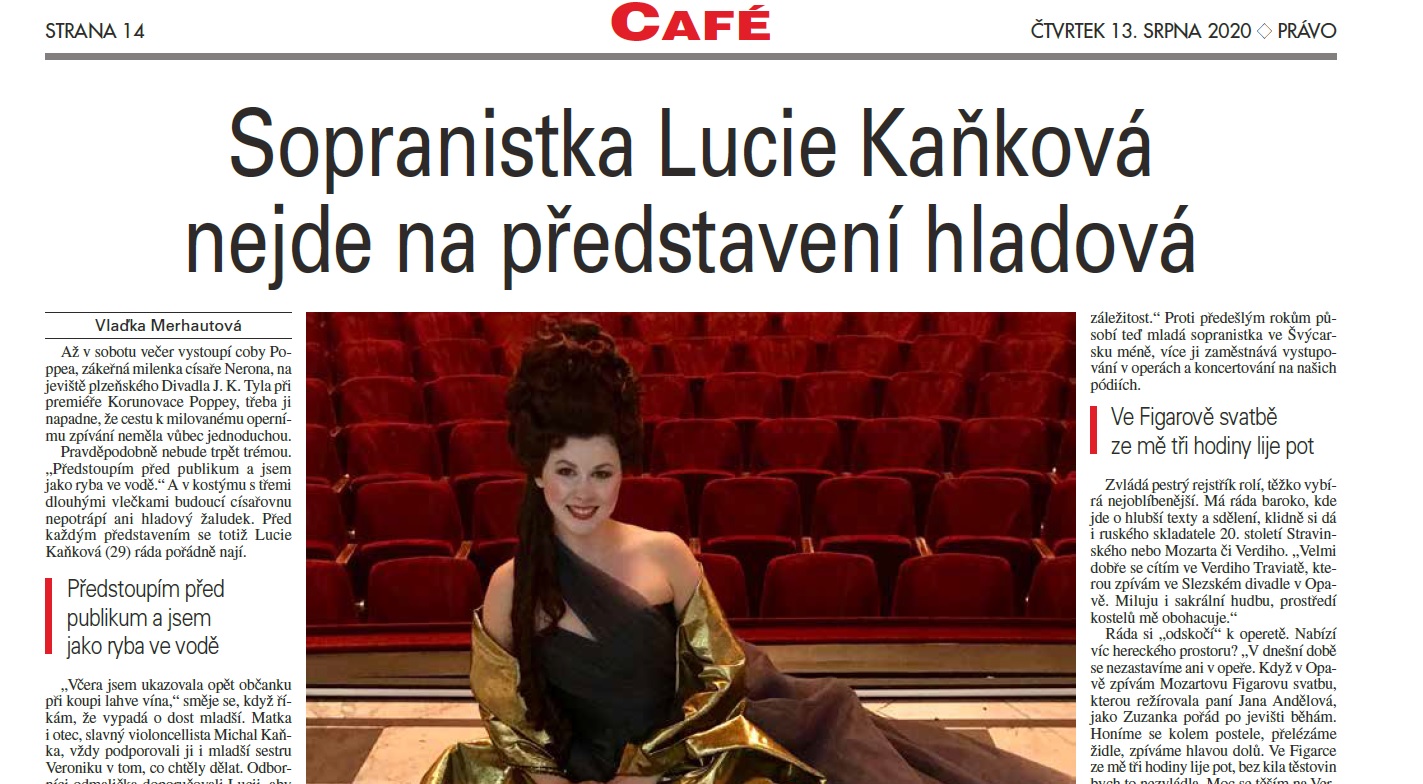
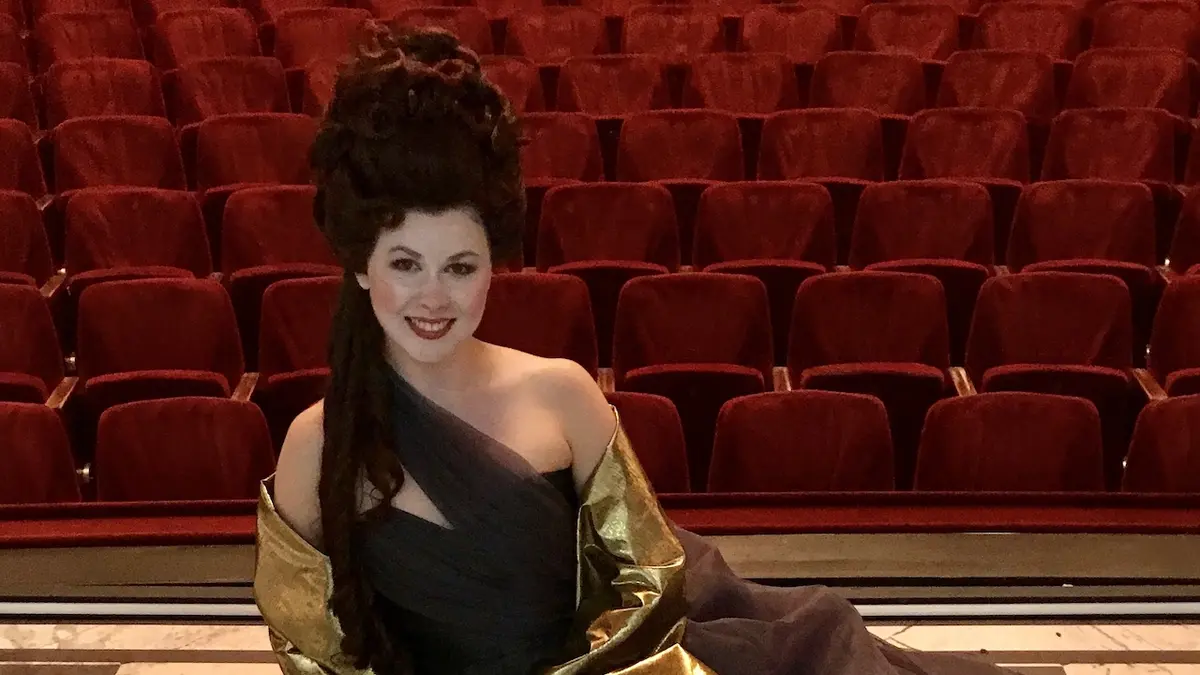
At the private premiere of The Coronation of Poppy in June, she tripped about four times because of the train on her gown.
“Yesterday I showed my ID card again when buying a bottle of wine,” she laughs when I say that she looks much younger. Her mother and father, the famous cellist Michal Kaňka, always supported her and her younger sister Veronika in whatever they wanted to do. Experts recommended that Lucie play the violin from an early age, which she started at the age of four and lasted for nineteen years. But she couldn’t handle the pressure from her peers. “At the conservatory, it got to the point where I didn’t even go on stage once. I got stuck because the expectations that I would be world-class like my dad were so high.”
At five, she joined the preparatory ballet class of the Prague National Theatre, where she stayed until she entered the music grammar school. She continued dancing later. She even opened her own dance school for adults during her studies at the conservatory.
Brave student
“I wanted to sing from the beginning. But they didn’t see my incredible potential here, so I decided to try my luck in the world,” she laughs heartily. Because she was dating a Swiss boyfriend, she wrote to the heads of the singing departments at three universities there, went to audition for them, and chose the singing professor Barbara Locher. She commuted to Bern for a year and then took the entrance exams to the Opera Studio in Biel. “In the end, I found only positive things about studying in Switzerland, I learned languages, and even wrote two master’s theses in German in Biel and then in Lucerne.”
When she first came to Professor Locher, she brought with her a difficult aria by the German composer Heinrich Proch (1809–1878). “I arrived with this crazy piece, basically without any singing technique. I had eight years of training with my teacher Magda Bělohlávková at the music school, who believed in me and prepared me for the audition.” The professor was impressed by the Czech student’s efforts and that she was not afraid. Twenty-two-year-old Lucie then convinced the director of the Opera Studio in Biel, even though the entire committee was against admission.
She found herself among her classmates in their thirties who had only attended the school after completing their bachelor’s or master’s degrees. “I came to them as a baby,” she laughs. She remembers how the cantors asked during the exams if she had any singing problems. “I told them all my shortcomings… Which they didn’t expect at all and they probably saw a certain humility. The principal was probably impressed by the honesty, so he decided to try it with me and treated me as a personal experiment. I remember he just turned to my professor and asked: Are you going to do it? And she nodded.”
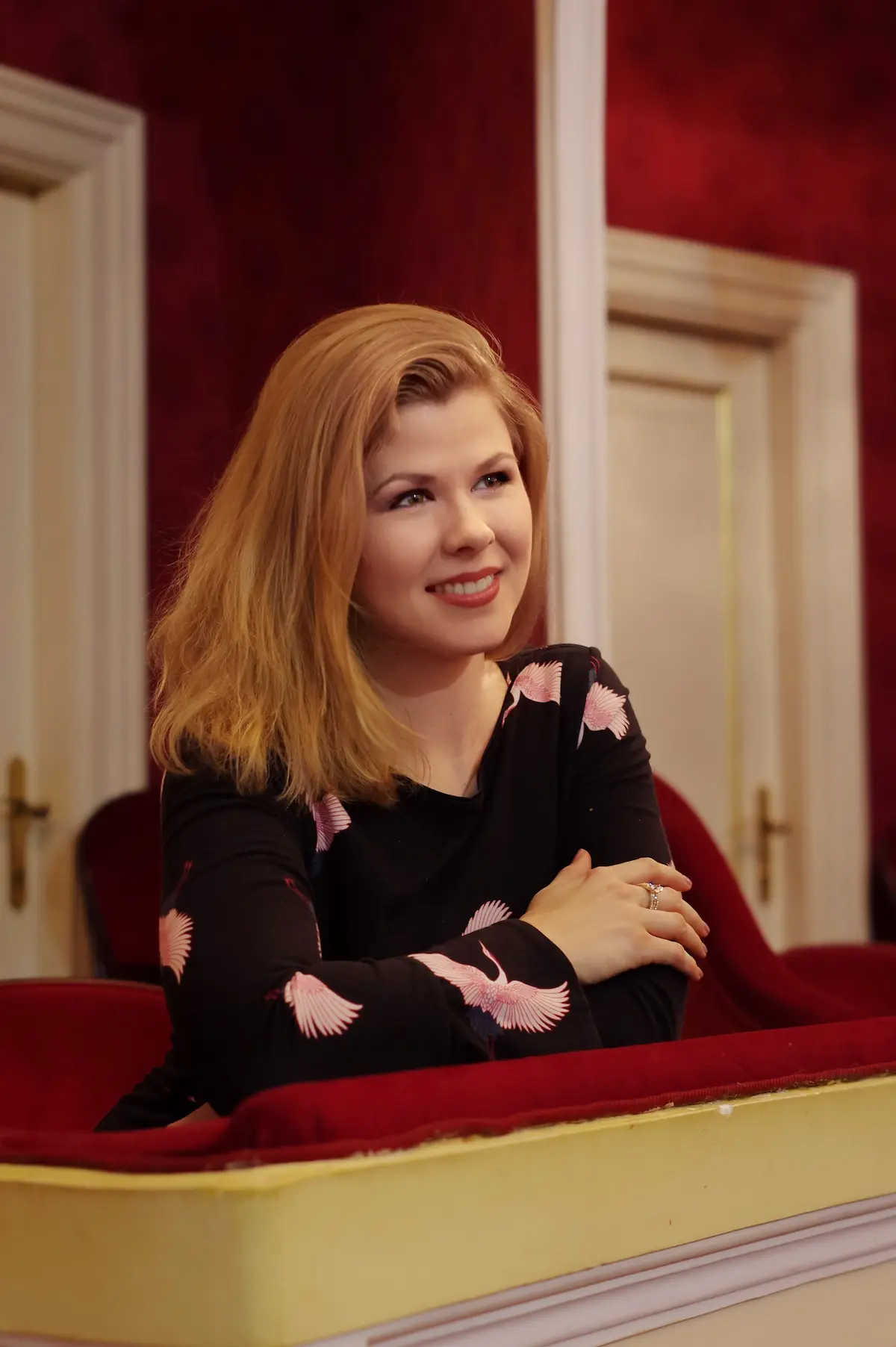
The first year was a real mental challenge. Her classmates already had singing and acting skills. “I was basically at the level of The Cat Climbs Out of a Hole,” she says. She had to master not only a lot of roles, but also her singing technique. While her German colleague came to class with a challenging aria by Richard Wagner, Lucie sang Hail, My Little Angel. After two years, she was able to complete her studies of the main roles of Teofane in Handel’s opera Ottone with distinction and the best average in her class. A few months later, she enjoyed a sense of satisfaction at home when she won the Antonín Dvořák International Singing Competition in Karlovy Vary in 2016.
What is life like in Switzerland? “I like their straightforwardness. When they say something, they mean it sincerely. They don’t pretend to be cordial, it’s not a pose like the English or Chinese. Not many Swiss people are into music, their work interests are more economically focused, so more foreigners perform in the theater. They like to go to concerts and performances, it’s a classy affair.” Compared to previous years, the young soprano is less active in Switzerland now, she is more occupied with performing in operas and giving concerts on our stages.
She can handle a diverse range of roles, it’s hard to choose her favorite. She likes baroque, where it’s about deeper texts and messages, she can also easily do the Russian composers of the 20th century Stravinsky or Mozart or Verdi. “I feel very good in Verdi’s La Traviata, which I sing at the Silesian Theater in Opava. I also love sacred music, the environment of churches enriches me.”
She likes to “jump” to an operetta. Does it offer more acting space? “These days, we don’t even stop at the opera. When I sing Mozart’s The Marriage of Figaro in Opava, directed by Mrs. Jana Andělová, I’m constantly running around the stage as Susanna. We chase around the bed, climb over chairs, sing upside down. I’m sweating for three hours in Figaro, I couldn’t have done it without a kilo of pasta. I’m really looking forward to Verdi’s Gilda in Rigoletto, which Mrs. Andělová will hopefully direct a little more calmly, so I’ll finally stop overeating,” she laughs, commenting on her appetite before a singing performance. She likes food, she eats a lot of everything.
Second place from the living room
She was excited about the role of the Queen of the Night in Mozart’s The Magic Flute at the Munot Festival in Switzerland, but the coronavirus postponed the project until next year. She will work up an appetite in the fall at the National Theatre in Prague, where she will play the same character in a series of several performances.
When she has free time, she sets out into the world with a group of archaeological enthusiasts to search for ancient civilizations. Earlier this year, they visited the islands of Bali and Java. “It was very nice, but once was enough for me,” she admits. Traveling brings us to social media. “They’re not exactly my cup of tea,” Lucie blurts out. She then adds that Facebook, where she posts work stuff, is rarely personal. She created Instagram to promote her biggest international online performance at an Australian singing competition. She finished in second place with the Queen of the Night aria, to which she played karaoke from YouTube. The video, filmed in a living room, in which she sings in a yellow T-shirt and orange pants, was a success among the hundreds of participants voted for by viewers during the corona.
At the end of the conversation with the tenacious soprano, a collector of various awards, who experts predict a stellar future, I can’t help but ask about her height. “I’m 173 and my sister is seven centimeters taller. My mother (a violinist who also performed with Karel Gott, but gave up playing after having children) fed us well from childhood. She hated powdered food, so she cooked everything honestly and added a quality steak to our vegetables,” Lucie Kaňková explains to me with a sweet smile.
The full text here:
Foto: private archive and Tomáš Kijas